Flowing quietly along Stafford’s eastern edge, the Rappahannock River is easy to overlook for residents focused on commutes, school schedules, and daily routines. Yet for centuries, the river has shaped life here—and today, it remains one of the county’s most underappreciated assets.
A River With Deep Roots
Long before modern roads and neighborhoods, the Rappahannock served as a vital route for trade, travel, and settlement. Indigenous communities relied on it for food and transportation, and early colonial development followed its curves.
That history still lingers—not just in textbooks, but in the landscape itself. Historic sites, quiet landings, and preserved shorelines tell a story of how Stafford grew from river communities into the county it is today.
A Natural Escape in a Fast-Growing County
As Stafford grows, the river offers something increasingly rare: space to slow down.
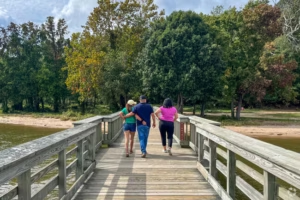
Local residents fish from the banks, paddle kayaks through calm stretches, or take evening walks along riverfront trails. Families picnic near the water. Photographers chase sunrise reflections. For many, the river provides balance—nature just minutes from home.
Parks and protected areas along the river have also become gathering places, blending conservation with recreation in ways that benefit both residents and wildlife.
Environmental Stewardship Takes Center Stage
With growth comes responsibility. Local organizations, volunteers, and county partners continue working to protect water quality, preserve habitats, and educate residents about the river’s role in the broader Chesapeake Bay watershed.
Cleanup days, student programs, and conservation efforts remind the community that the river’s future depends on collective care—not just policy decisions.
Economic and Cultural Impact
Beyond recreation, the Rappahannock quietly supports Stafford’s economy. Outdoor tourism, fishing, small outfitters, and nearby businesses benefit from river access. At the same time, the river influences how development is planned, encouraging thoughtful land use and preservation.
It’s a reminder that progress and protection don’t have to be opposites.
As Stafford continues to evolve, the Rappahannock River remains a constant—flowing past neighborhoods old and new, connecting generations through shared experience.
In a county defined by change, the river offers continuity. And for residents willing to pause and notice, it remains one of Stafford’s greatest strengths.